
Images are for illustration only. Actual product may vary.
Wiggle Seat Cushion
A seat that lets the wiggle out, so focus can stay in.
- Your child stands up every two minutes during homework
- Mealtimes end with them squirming off the chair
- They tilt back on chair legs, wrap legs around furniture, sit upside down
- Teachers say they fidget through every lesson
- They can focus, but only if they're allowed to move while they sit
The idea behind it
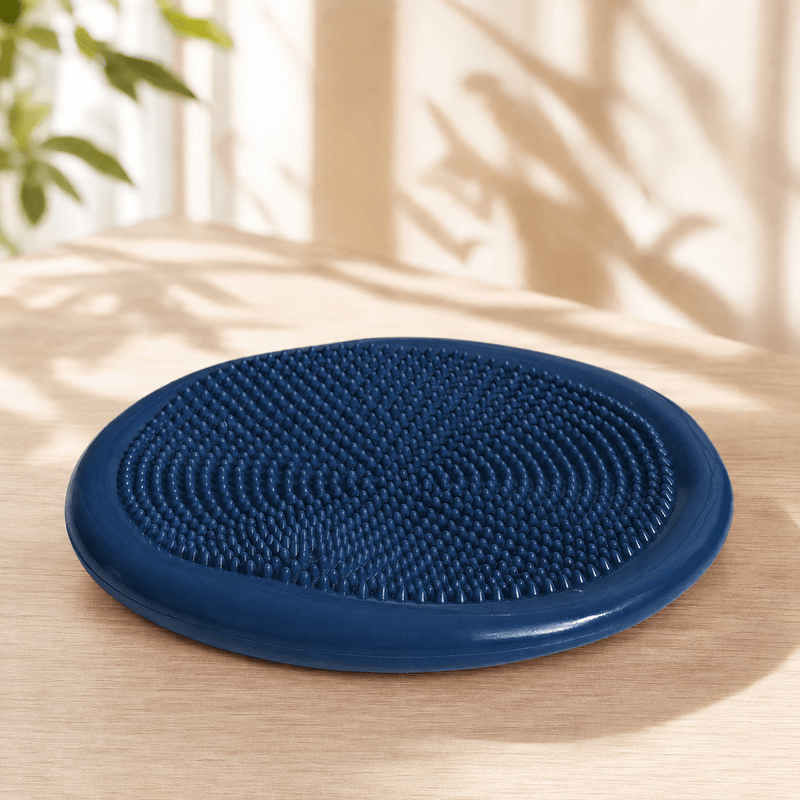
The wiggle seat is an inflatable disc with a textured top. Placed on a chair, the floor, or a sofa, it lets your child bounce, tilt, rotate, and shift. Small motions that satisfy the vestibular system without leaving the seat. The result: they stay seated for homework, meals, classes, and story time longer than they could on a flat surface.
The textured top doubles as tactile input under bare feet or hands. An inflation valve lets you adjust the firmness. Designed with our OT panel.
Please use safely
Use with adult supervision. This is not a toy and not a flotation device, never use in or near water. Inflate until it has give but does not collapse, over-inflating makes it unstable and easy to slip off. Place it on a stable chair or a flat floor, not on a raised or moving surface. Keep away from sharp objects that could puncture it. The valve and pump are small parts, keep them away from babies and very young children. Stop use if the seat is damaged or leaking.
Product details
Material: PVC
Size: 33 cm diameter
Net quantity: 1 wiggle seat + 1 hand pump + usage and safety card
Packed & marketed by: NeuroBuddy India
Supervision required: Yes. Care: wipe clean with a damp cloth, do not machine wash.
Best for
Children aged 4+ who can't stay seated for tabletop tasks, meals, or classroom time.
What's inside
How to use it at home
Find the right firmness
Inflate the cushion until it has give but doesn't collapse. Your child should bounce, not sink. Test by sitting on it yourself — there should be 2–3 cm of compression under your weight. Too soft and they'll lose balance; too firm and the movement disappears.
Pick one seated task
Use it for the single hardest sitting moment of the day. Homework. Dinner. Story time at school (if the teacher allows). Don't use it everywhere yet — your child needs to associate it with one task at a time.
Expand or rotate
If it's working, add a second context. If it's not, try the floor instead of the chair. Some children use it as a play surface for tactile input — barefoot standing, hand-pressing the textured side. All of those count.
Reviews
Every product is designed with occupational therapists
Our clinical panel works with Indian children every day. Every product is reviewed for safety, developmental fit, and how well it works in a real home — not just a clinic. If your child's OT recommends something different, listen to them first. We're a tool, not a substitute for therapy.
Take the 5-minute Readiness Check
17 questions across 6 areas. At the end, you'll get a personalised list of which tools are right for your child today — and which to wait on.